If you’re a marketing leader, you’re probably spending real energy proving your team’s impact in terms finance can act on. The even harder problem is that there’s less time than ever to build the kind of shared understanding that makes those conversations easy. Average CMO tenure has declined 35% since 2010, meaning marketing leaders have less time to earn the trust that used to build up slowly over years.
 The old approach of letting results speak for themselves isn’t built for that shorter timeline. Today, marketing leaders need to intentionally and proactively build trust with finance so it’s there in the most crucial moments.
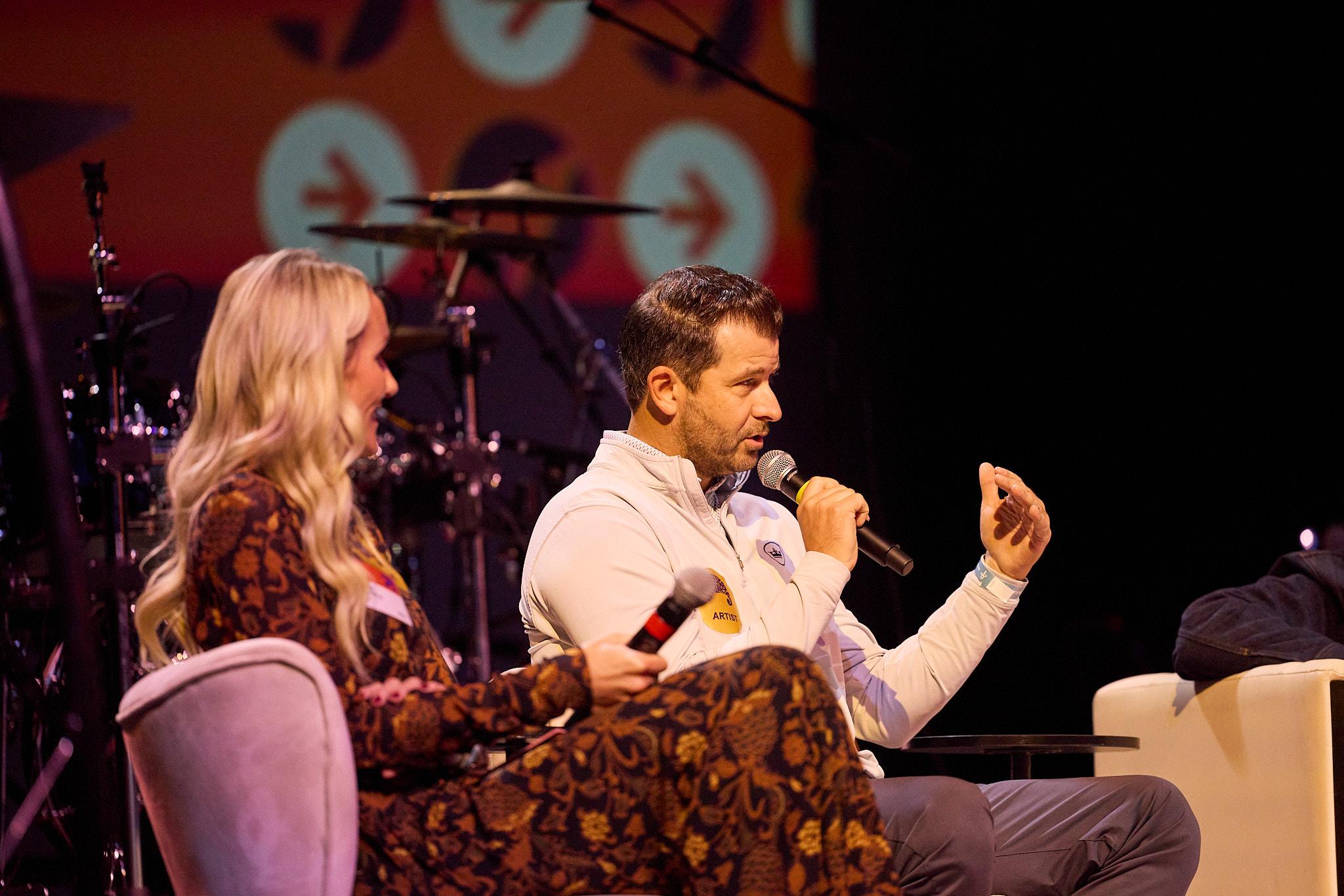
At Trailblazers Live 2026: The Curiosity Revolution, Ovative brought together three leaders who are already doing exactly that: a marketing leader from Aerie, a finance leader from American Eagle Outfitters Inc., and Andy Leapaldt, VP of Performance Marketing and Digital Commerce at Post Consumer Brands.
For Aerie, the stakes are real and rising. As American Eagle Outfitters Inc.’s standout performer, Aerie has posted back-to-back quarters of strong revenue growth over the past year. That level of fast growth can tempt a team to chase it with short-term, provable metrics instead of investing in the harder-to-measure brand work. But Aerie’s marketing team has taken on that challenge, committing to upper-funnel, brand-building work that’s arguably driving the growth.
The pressure runs differently for Post Consumer Brands. Budget moves between commerce media partners, funnel stages, and trade and media, and it needs to move at the pace of results. That only works when marketing and finance share a view of what’s driving incremental return, so reallocation can be approved quickly and with confidence.
While panelists came from different industries, the core challenge remains the same: how do you build a marketing and finance relationship that can keep up with business needs? Here’s what building that trust looks like in practice.
Key Takeaways
- Collaboration can't be seasonal. Trust gets built through ongoing contact at real, recurring moments, not just budget cycles.
- Successful meetings with finance rely on shared language. Metrics like customer volume and retention earn more trust in the room than ROAS or iROAS.
- A shared north star makes testing safer. When marketing and finance agree on the goal upfront, bold bets become shared bets, not solo risks.
- Trust is what lets you make bold marketing bets. The marketing teams able to test without full proof upfront are the ones who already have the finance relationship to back it.
Don’t Wait for Budget Season to Collaborate
The clearest pattern for brands building real trust with finance: not waiting for planning season to get started. At Aerie and American Eagle Outfitters Inc., marketing and finance work through the numbers together on an ongoing, regular basis, independent of any budget cycle. The duo builds trust by assuming positive intent and encouraging real disagreement about what the numbers mean.
The finance leader described the relationship as one rooted in curiosity, transparency, and creativity, with both sides agreeing on a path forward for whenever an idea doesn't pan out as expected. Those same habits carry into bigger, higher-stakes moments too, like long-range planning, where they pull in partners such as merchandising. By the time a moment like that arrives, marketing and finance have already tested the relationship in lower-stakes rooms first.
The payoff has shown up in moments most marketing and finance partnerships never reach. The Aerie marketing leader described one moment as pure joy: his finance counterpart coming to marketing to ask about a dip in brand equity. That kind of question only gets asked once finance already sees brand health as a shared metric, not just marketing's metric. And that only happens when teams build that kind of trust long before anyone needs it.
Learn How to Speak Finance’s Language
The Aerie marketing leader pointed to a deliberate shift in what gets discussed with finance and where. Media metrics like ROAS and iROAS have a place, but it isn't in meetings with finance. They rarely come up in the duo's conversations anymore since they don't translate to something the business can bank on. Marketing has shifted to metrics like customer volume and retention, which tell finance whether the business is building something durable.
It's a trade Leapaldt echoed from his position at Post Consumer Brands, choosing metrics finance could plan against over the ones that looked better in a weekly report.
Align on a North Star Before Testing
In his keynote kicking off Trailblazers Live, Dale Nitschke, Ovative’s CEO and Founder, pointed to aligning on a north star as one of the two moves that matter most for leaders navigating change. Leapaldt cited that exact idea as the foundation for how marketing and finance agree on a bet before testing it, not after:
“A practical foundation for working together is identifying a north star. Doing that and aligning the org has been one of our biggest unlocks,” Leapaldt said.
Without a shared north star, marketing and finance teams end up optimizing for different things and discovering the mismatch only after it’s expensive to fix. With one, a disagreement over a specific spend becomes a conversation about whether it serves a goal both sides already agreed on, not a fight over whose numbers are right.
Trust Lets You Make Bold Moves
“Trust is currency,” Leapaldt said.
That shared foundation and trust gave Leapaldt’s team room to make a bet that looked rough on paper in the short term: shifting investment from linear to streaming toward a more targeted, efficient audience. Rather than asking finance to take it on faith, Leapaldt’s team put the assumptions on the table first. If the results held up, they’d do more. If not, they’d pivot.
That same level of trust let Leapaldt stop defending every quarter’s number. When asked whether tension still exists between marketing and finance at Post, his answer was no, because the trust his team had already built meant finance judged them on more than this quarter’s results. He could show finance a path to profitability even in a quarter where short-term growth wasn’t there, as long as he’d set expectations up front about what that longer path looked like.
Are You Ready to Earn Finance’s Trust Before You Need It?
No one handed these teams a shared script. Each built trust their own way, through simple, repeatable habits: showing up consistently, translating marketing’s impact into finance’s language, and agreeing on what winning looks like before the stakes get high. The habits themselves don’t require years of tenure to start. They require starting.
It’s also the discipline Ovative builds media and measurement around. Enterprise Marketing Return exists to measure the outcomes finance already trusts: revenue, customer growth, and brand strength.
For more from the Trailblazers Live stage, read our full recap here. And if your marketing and finance teams are still not operating from the same language, let’s talk about what that could look like for you.
Images photographed at Paisley Park.